
1. Halogen Headlights
Halogen headlights are the most traditional and widely used type of automotive lighting, especially in older vehicles and entry-level models. They work by passing an electric current through a tungsten filament enclosed in a bulb filled with halogen gas (usually iodine or bromine). When heated, the filament emits light.
Advantages
One of the biggest benefits of halogen headlights is low cost. They are inexpensive to manufacture, easy to replace, and widely available. Maintenance is simple, making them a practical option for budget-conscious drivers. Halogen bulbs also provide a warm, yellowish light that many drivers find comfortable on the eyes.
Disadvantages
However, halogen headlights are less efficient than newer technologies. A large portion of the energy they consume is lost as heat rather than light. Their brightness and illumination range are also relatively limited, which can reduce visibility at high speeds or on dark rural roads. In addition, halogen bulbs have a shorter lifespan, typically lasting 500–1,000 hours.
Best for
Halogen headlights are best suited for drivers who prioritize affordability and easy replacement and mainly drive in urban or well-lit environments.
2. HID (High-Intensity Discharge) Headlights
HID headlights, also known as xenon headlights, marked a major step forward in automotive lighting technology. Instead of a filament, HID bulbs generate light by creating an electric arc between two electrodes inside a xenon gas-filled capsule.
Advantages
HID headlights produce significantly brighter light than halogen bulbs, often close to natural daylight. This improves nighttime visibility, road sign recognition, and long-distance illumination. They are also more energy-efficient than halogen and typically last longer, often up to 2,000 hours.
Disadvantages
Despite their performance benefits, HID headlights have some drawbacks. They are more expensive than halogen bulbs and require additional components such as ballasts and igniters. Improperly installed or poorly aligned HID systems can cause glare to oncoming traffic, which is both unsafe and illegal in some regions. Additionally, HID lights need a brief warm-up time to reach full brightness.
Best for
HID headlights are ideal for drivers who want strong illumination and improved night driving safety, especially on highways or poorly lit roads.
3. LED (Light-Emitting Diode) Headlights
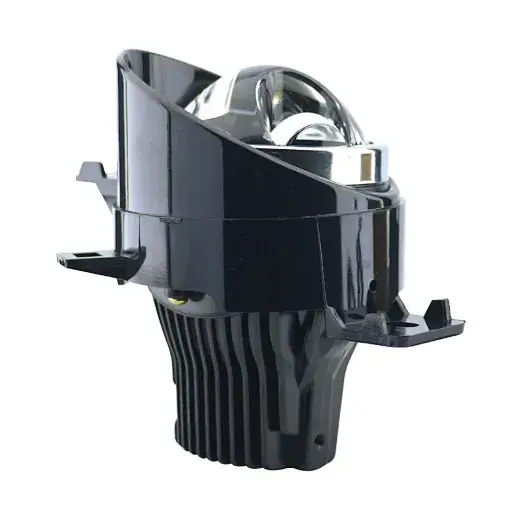
LED headlights have rapidly become one of the most popular lighting technologies in modern vehicles. Instead of using filaments or gas, LEDs produce light through semiconductors that emit photons when electricity passes through them.
Advantages
LED headlights are highly energy-efficient, consuming less power while producing bright, clear light. They have an exceptionally long lifespan, often exceeding 20,000 hours. LEDs also offer great design flexibility, allowing manufacturers to create sleek, compact headlamp shapes and advanced features such as adaptive lighting, daytime running lights (DRLs), and dynamic turn signals.
Another key benefit is instant full brightness, with no warm-up time. The light output is typically white or slightly cool, improving contrast and visibility.
Disadvantages
The main downside of LED headlights is cost, particularly when replacing entire LED modules rather than individual bulbs. Heat management is also critical—while LEDs produce less heat than halogen, they must be properly cooled to maintain performance and longevity.
Best for
LED headlights are perfect for drivers who want modern styling, high efficiency, long service life, and advanced lighting functions.
4. Laser Headlights
Laser headlights represent the most advanced and cutting-edge automotive lighting technology currently available. They use laser diodes to generate intense light, which is then converted into safe white light using phosphor materials before being projected onto the road.
Advantages
Laser headlights offer exceptional brightness and range, often illuminating distances of 500–600 meters—far beyond what LED or HID systems can achieve. They are extremely compact, allowing for innovative headlamp designs. Despite their power, laser headlights are also highly energy-efficient.
Disadvantages
The primary drawback is very high cost, which limits laser headlights to luxury and high-performance vehicles. Their complexity also makes repairs and replacements expensive. Currently, laser headlights are usually used in combination with LED systems rather than as standalone low beams.
Best for
Laser headlights are best suited for premium vehicles and drivers who demand maximum visibility, advanced technology, and top-tier performance.
Conclusion
In summary, the four main types of headlamps—halogen, HID, LED, and laser—each serve different needs and budgets. Halogen headlights remain a cost-effective, basic solution; HID headlights offer brighter and longer-range illumination; LED headlights deliver efficiency, durability, and modern design; and laser headlights push the boundaries of performance and innovation. Understanding these differences helps drivers make informed decisions when choosing a vehicle or upgrading their lighting system, ultimately leading to safer and more confident driving in all conditions.